
Psychological Approaches to Stuttering Therapy
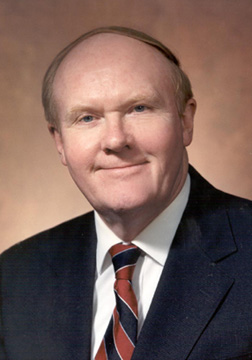
by William D. Parry, J.D., M.A., CCC-SLP
|
This article is adapted from Chapter 20 of Understanding & Controlling Stuttering (2d ed., 2000, 5th Printing, updated 2009). This and other articles on this website will discuss various forms of stuttering therapy in the context of the Valsalva Hypothesis and their possible effects on the "Valsalva-Stuttering Cycle." For a more thorough introduction to the Valsalva Hypothesis and the Valsalva-Stuttering Cycle, see Stuttering and the Valsalva Mechanism: A Key to Understanding and Controlling Stuttering Blocks. THE 1920's and 1930's saw fundamental changes in the nature of stuttering therapy. Earlier forms of treatment such as elocution drills, rhythm, spe�cial speaking tech�niques, and other meth�ods discussed in the previous chapter fell into disfavor because of their failure to pro�duce lasting cures. In their place arose a new gener�ation of therapies, based on the premise that the key to stut�tering did not lie in the mechanics of speech but rather in the stutterer's mind. The new therapies did not worry too much about the outward physical symp�toms of stuttering. Instead, they focused their attention on var�ious psychologi�cal factors that were thought to be at the root of stuttering be�havior. The psychological approaches began largely as a reac�tion to the quackery that had pervaded the field of stut�tering therapy up to that time. Some of their early advo�cates were, in fact, stutterers who had been stung by the commercial "stuttering schools" C which had promised "cures" but pro�duced only tem�porary fluency that quickly fell apart. In contrast to the super�ficiality of the earli�er methods, the new approaches were sup�posedly based on more "enlight�ened" views of stuttering. They offered the hope that stutterers could perma�nently overcome their problem by changing from within. These psychologically oriented therapies grew out of two separate schools of thought. The first approach, inspired by the psychoanalytic theories of Sigmund Freud and his followers, usually blamed stuttering on repressed emo�tions or con�flicts, buried deep in the stutterer's un�con�scious mind. It tried to un�cover and resolve these prob�lems through various forms of psycho�therapy. Ac�cording to this theory, once the underlying con�flicts were gone, the stutter�ing symptoms would disappear of their own accord. The second approach was de�veloped by early pioneers in stuttering research at the University of Iowa. It at�temp�ted to reduce the struggle and avoid�ance associated with stuttering by changing stutterers' attitudes about their speech. Despite their good intentions, the psychologi�cal ap�proaches ultimately created more confusion, frus�tration, and misunder�standing than ever be�fore. To some extent, they were correct in recog�nizing that stuttering behavior can be greatly af�fected by uncon�scious thoughts and emo�tions. (Many of these fac�tors have been previously dis�cussed in Chapter 12.) However, in their single-minded pursuit of certain psychological aspects of stut�tering, they usually tended to ignore the physio�logical side of the problem. Even worse, there were many psychothera�pists (the Freudians in particular) who dogmatically insisted that stutter�ing was solely the result of emo�tional conflicts or other per�sonality disorders, without any physiologi�cal component what�soever. In this regard, many of the psychological view�points suf�fered from the same kind of "tunnel vision" that has distorted other theories about stuttering. Therapies built on such narrow and shaky founda�tions provide little sup�port for the person who stut�ters. As we shall see, they can even make matters worse. Freudian Psychotherapy Sigmund Freud profoundly influenced modern thought by showing how human behavior can be influenced by emotions, de�sires, fears, conflicts, and traumatic child�hood experiences that have been re�pressed into the un�conscious mind. For treating these deeply rooted prob�lems, Freud developed an elaborate form of psychother�apy known as psycho�analy�sis. In this intensive form of treatment, the patient lies on a couch and, guided by a specially trained analyst, em�barks on an exhaustive search into his innermost thoughts, feelings, and mem�ories. Among the techniques used in this process are free associa�tion (in which the patient reports whatever comes into his mind, allowing one thought to lead into anoth�er), analysis of the patient's dreams, and a phenomenon called transference (in which the pa�tient develops feelings to�ward the analyst that are similar to those he originally felt toward his parents or other sig�nificant adults in his child�hood). The analytic sessions may be as frequent as five times a week and may continue for several years. Because of the tremendous cost of psychoanal�ysis, most psychotherapy has been more modest in scale. Typically, the patient meets with a psychia�trist or psy�chologist once a week and sits in a chair rather than lying on a couch. The thera�pist en�cour�ages the patient to talk about his problems, feelings, and memories, and helps him to re�solve various issues as they come up. It should be noted that Freud himself doubted that his psychoanalytic approach was appropriate for stuttering. Never�the�less, his followers came up with a number of theories (pre�viously mentioned in Chap�ter 12) that at�tempted to explain stuttering in psycho�analytic terms. Stuttering therefore found its way into text�books on "ab�normal psychology." Stutterers were branded as "neur�otic," and their mothers were often blamed for caus�ing them to have defec�tive, stuttering person�alities. These theories not only proved to be worth�less in the treatment of stutter�ing, but they also caused indelible harm to stut�terers and their families by in�flicting shame, guilt, and social stigma. Studies have shown that C regardless of its other bene�fits C psychotherapy is usually not an effective treatment for stutter�ing. The experience of the late Charles Van Riper, the well-known speech patholo�gist, is typical. After going through psycho�analysis, he found himself to be better ad�justed, but still stut�ter�ing. I have heard similar stories from other per�sons who stutter. I myself spent years in various forms of indi�vidual psy�chotherapy and more than a decade in psychoanalysis, plumbing the depths of my uncon�scious mind in search of the key to my stutter�ing. While I did gain some val�uable insights into vari�ous emotional factors that may have increased my tenden�cy to stutter, I never discovered any psycho�logical "smoking gun" that would finally solve my problem. The fact that psychotherapy rarely cured stut�tering did not deter many devout Freudians. In�stead of questioning the validity of their underlying theo�ries, they interpreted their failures as merely demon�strating how deeply dis�turbed, and difficult to treat, stutterers really were. Thus, the fallacious view of stuttering as a "neurosis" was fur�ther com�pounded, leaving stutterers to feel more hope�lessly crazy than ever. It is possible that some stutterers in psycho�thera�py did, in fact, have emotional or personality prob�lems that tend�ed to aggravate their stuttering behav�ior (as previously discussed in Chapter 12). Howev�er, there was no jus�tification for assuming that all stutterers had these prob�lems, that these problems actually caused stuttering, or that they were the only factors involved. On the con�trary, it seems more likely that the frus�tration of stutter�ing caused the emotional problems, rather than vice versa. Further�more, as previously mentioned in this book, studies have shown that stutterers as a group are no more neur�otic than the general pop�ulation. The limitations of Freudian psychotherapy can now be clearly understood in terms of the Valsal�va-Stuttering Cycle. As we have seen, stuttering in�volves both physio�logical and psychological fac�tors. Step 1 of the Valsalva-Stuttering Cycle be�gins with our anticipation that speech will be diffi�cult. While emotional conflict may contribute to this perception (as previously dis�cussed in Chapter 12), it is only one out of many factors that may do so. In addition, there are many other stresses or "cues" that may provoke stuttering in a given situa�tion, even in the complete absence of emotional conflict. Freudian psycho�therapy is therefore of limited value in allevi�ating stutter�ing, because it does not address these many other con�tributing factors. Furthermore, because we cannot hope to elimi�nate all stress from speaking situations, an effective therapy pro�gram must help change the way we react to such stress C both mentally and physically. For example, it should help us to avoid the urge to "try hard" to force the words out, as if they were "things" (as described in Step 2 of the Valsalva-Stuttering Cycle). It should also include tech�niques aimed at controlling the Valsalva mech�an�ism in a physical way, to keep it from interfering with speech (as described in Steps 3 and 4 of the Cycle). Nevertheless, psychotherapy could be a useful adjunct to such a program, in helping to resolve emotional prob�lems that may be aggravating a partic�ular individual's stuttering or that may have resulted from years of disfluency. However, it must be based on a philosophy that recognizes the crucial impor�tance of physiological mech�anisms in stuttering be�havior. Varieties of Psychotherapy Over the years, many psychotherapists have broken away from strict Freudian concepts in their attempts to explain and treat stuttering. The fol�low�ing is a brief assessment of only some of these varia�tions. Recognition of "repressed needs." One of my early experi�ences with psychotherapy introduced me to the rather simplistic notion that my stutter�ing was caused by my repression of uncon�scious needs and desires. Simply put, stuttering suppos�edly signified a conflict between what I was con�sciously trying to say and what I uncon�sciously really wanted to say. The proposed solution was to say only what I really wanted to, and to stop trying to say things that con�flicted with my true desires. As a naive high school student, I found this formula�tion to have great appeal. It gave me permis�sion to stop trying to please others when I spoke, and for a while it did seem to improve my fluency. But the theory had a fundamental flaw. If stuttering indicated conflict and fluency indi�cated harmony with my true desires, did this mean that I should say only what came fluently and avoid saying the things I stuttered on? (Like my name, for example?) Did this mean that I should avoid difficult speaking situa�tions and con�fine my conversation to the kind of in�nocuous remarks that didn't cause me to block? And did it mean that I should refuse to answer when the teacher called on me in class? Ob�viously, this theory was neither accurate in explain�ing stut�tering nor helpful in overcoming it. On the contrary, it was a prescrip�tion for disaster! Releasing repressed anger. Another once-popular theo�ry saw stuttering as a symptom of re�pressed anger. Some therapists therefore at�tempt�ed to provoke stutterers to feel and express their anger. Often, this release of emo�tion was accom�panied by temporary fluency. This explanation seems to put the cart before the horse C since much of a stutterer's anger seems to be a result of his frustration over not being able to speak in the first place. Further�more, the "anger" approach to fluency does not provide an appropriate long-term strategy, as I can again attest from person�al experience. During high school, I learned that I could be perfectly fluent when I let my anger loose. There�fore, I ex�perimented with speaking in an angry tone of voice whenever I felt I was going to stutter. For a while this technique seemed to help, but I continually needed to increase my level of anger in order to maintain its effec�tiveness. Before long I had turned into a very surly, unpleasant person, whose angry fluency was rapidly alien�ating all his friends. "Expectancy neurosis" therapy. Some psycho�therapists do not see stuttering in terms of emo�tional conflicts or repressed needs, but rather as an expec�tancy neurosis, based on the stut�terer's fixed belief that speech is dif�ficult. According to this theory, it is simply the stut�terer's expectation of difficulty that produces the stutter�ing behavior. Therefore, the goal of therapy is to dis�abuse the stutterer of this idea and to convince him that speech is actually easy. In attempting to show the stutterer that he is capable of fluent speech, therapists have used some of the fluency enhancing conditions previous�ly dis�cussed in Chapter 17, such as unison reading and shadowing. The purpose was not to have the stutter�er rely on these techniques per�manently, but merely to change his mental expectations. During the 1930's and 1940's, a technique called breath-chewing was used by Froeschels and others for this pur�pose. Stutterers were taught first to make vocal sounds while moving their jaws in large mo�tions, as if speaking in some savage language. Then they would speak while making chewing motions, and then imagine they were chewing their breath while speaking. These approaches to therapy might have an effect on Step 1 of the Valsalva-Stuttering Cycle, by reduc�ing the stutterer's anticipation of difficulty and by changing his self-image as a speaker. How�ever, it is hard to believe that stutterers' beliefs and behavior will be permanently changed by showing them a few gimmicks that conjure up temporary fluency. Most stutterers already know that they can be fluent some of the time! What stutterers really need is a thorough under�standing of why they stutter when they do and a way to control that behavior. Therefore, therapy should not only show that speech is easy; it must also ex�plain exactly why stut�terers make it so hard. As we have seen, the stutterer's basic misconception is his unconscious assumption that words can be forced out, as if they were "things," with the assistance of the Valsalva mechanism. In addition to dis�pelling this belief on a psychological level, therapy must deal with the stut�terer's ten�dency to activate the Valsalva mech�anism during speech on a behavioral level as well. Cognitive behavior therapy. This approach to psycho�therapy (sometimes called rational emotive behav�ior therapy) is based on the theory that our feel�ings and behavior are influenced by the beliefs that we carry around in our heads. The therapist therefore helps the patient to iden�tify the detri�mental things he is telling himself, to recog�nize their falsity, and to replace them with improved beliefs through a process of rational think�ing. It is easy to see how this approach might be helpful in revising a stutterer's beliefs about the difficulty of speech, his attitudes about stuttering, and other harmful ideas. How�ever, rational think�ing alone is not sufficient to con�quer stuttering. (A clinical trial in Australia found that, although cognitive behavior therapy was associated with significant improvement in psychological functioning in persons who stutter, it did not improve their fluency. Menzies, R.G., et al., An experimental clinical trial of cognitive-behavior therapy package for chronic stuttering. Journal of Speech, Language & Hearing Research, 2008, 51, 1451-1464.) Therefore, cognitive therapy should be integrated with a holistic approach that encom�passes all of the steps in the Valsal�va-Stut�tering Cycle -- both psychological and physical. Attitude Therapy The second school of thought, mentioned earlier in this chapter, emerged out of stuttering research done at the Univer�sity of Iowa in the 1920's and 1930's. Originally the experi�ments were about cere�bral dominance and changing the hand�edness of stutterers. However, those efforts were eventually abandoned in favor of various therapies based on the stutterer's attitudes and anxieties about speech. This approach to treatment, commonly known as at�titude therapy, was aimed at changing the stutter�ers' mental attitudes behind their stuttering behavior, such as their feelings and anticipa�tions about speech and stutter�ing, their self-image as a speaker, their reactions to stut�tering, etc. It was thought that many of these attitudes and feelings may have developed as a result of stuttering expe�riences. Although they were not the original caus�es of stuttering, they might nevertheless help to perpetuate stuttering behavior. Therefore, stutterers were taught to look objec�tively at their stuttering, without all the fear and emotional in�volve�ment. They were encouraged to talk about stutter�ing in a free and open way. They were told not to look at stuttering as an external force that afflicts them, but rath�er as something that they themselves do. This was the first type of stuttering therapy to which I was exposed, beginning back in high school. Once or twice a week, I would take a nauseating bus ride from my home town to a near�by city, where I was enrolled at the speech clinic of a major universi�ty. I remember sitting with a group of hang-dog, ado�lescent stut�terers, telling a well-meaning young woman therapist how rotten we felt about stuttering. This went on for about a year, with nothing to show for it but several cases of bus-sickness. I was again placed in this type of therapy while I was in college, which at least did not require the bus ride. Viewed in terms of the Valsalva-Stuttering Cy�cle, at�titude therapy may affect Step 1 (anticipa�tion of difficul�ty) and Step 6 (reaction to stutter�ing). However, it is difficult to change mental attitudes without backing up the exhor�tations with a clear understanding of the exact mechanisms involved in stut�tering and teaching the stut�terer speci�fic ways to change his be�havior to pro�mote fluen�cy. There�fore, attitude therapy should be in�tegrated with other forms of therapy that effect changes in other steps of the Cycle as well. Acceptance of stuttering. Some therapists carry at�titude therapy to the point of saying that the goal of fluency is largely unattainable, and therefore the stutterer should simply learn to ac�cept his stuttering and live with it. Rather than holding out false hopes, the ther�apist should teach the patient how to stut�ter open�ly in a more relaxed way. Certainly, it is bet�ter to be a "happy stut�terer" than to be frus�trated, angry, with�drawn, and miser�able. However, it is the rare stutterer who is satis�fied with this approach. Most of us go to therapy for the specific purpose of re�ducing our stuttering C not to be told by the therapist, "Don't worry about it!" Nevertheless, it is probably true that the road to fluen�cy must begin with the acceptance of one's stuttering. It is dif�ficult to understand and con�trol stut�tering while we are con�stantly hiding from it, denying its existence, or strug�gling against it. Therefore, some ther�a�pies use an exer�cise called volun�tary stuttering, in which the stutterer is as�signed the dif�ficult task of stutter�ing on purpose in vari�ous situations. One of the objectives is to reduce his fear of stuttering, so he will not react so fear�fully to speaking situations. This tech�nique will be dis�cussed at greater length in the next chap�ter, in the con�text of be�havior-oriented thera�pies. Stuttering modification. Some practitioners of attitude therapy, including the emi�nent authority on stut�tering, Charles Van Riper, even�tually dis�covered that attitude change alone was not suffi�cient to con�trol stuttering. People still continued to stut�ter, even when they no long�er feared it. (This should not be surprising, because the fear of stuttering is only one aspect of Step 1 in the Cy�cle.) Therefore, Van Riper expanded the scope of attitude therapy to include approaches aimed di�rectly at the stut�tering behavior itself. He devised various techniques to modify the stuttering symp�toms and to help stutterers cope with their stutter�ing blocks. In the next chapter, Behavior-Oriented Stuttering Therapies, we will discuss these tech�niques in the context of behavior-oriented thera�pies, as well as exploring other forms of behavior modifi�cation techniques and "fluency shaping" programs. |
|
William
D. Parry, Esquire, CCC-SLP
A licensed speech-language pathologist and
trial lawyer, offering stuttering therapy and counseling (including Valsalva
Control therapy) in person in Philadelphia and over the Internet via webcam
(subject to applicable law).
Mr. Parry is also available to provide practical advice and legal counseling
regarding discrimination matters.
Ofice: 1608 Walnut Street, Suite 900, Philadelphia, PA 19103
Websites:
Stuttering Therapy and Counseling:
www.stutteringtherapist.com
The Valsalva-Stuttering Network:
www.valsalva.org
Valsalva Control Therapy for Stuttering is a new, on-line therapy to improve fluency by controlling the physiological mechanism that may be causing stuttering blocks. For further information on Valsalva Control Therapy, visit Stuttering Therapy and Counseling at www.stutteringtherapist.com, or e-mail Mr. Parry at stutteringtherap@aol.com to arrange a free consultation. |
Return to Stuttering Therapist Home Page
Return to Stuttering Therapy: A Comprehensive Guide
Last modified July 14 2010.
Copyright � 2002, 2004, 2009, 2010 by William D. Parry
 Contact Information: